
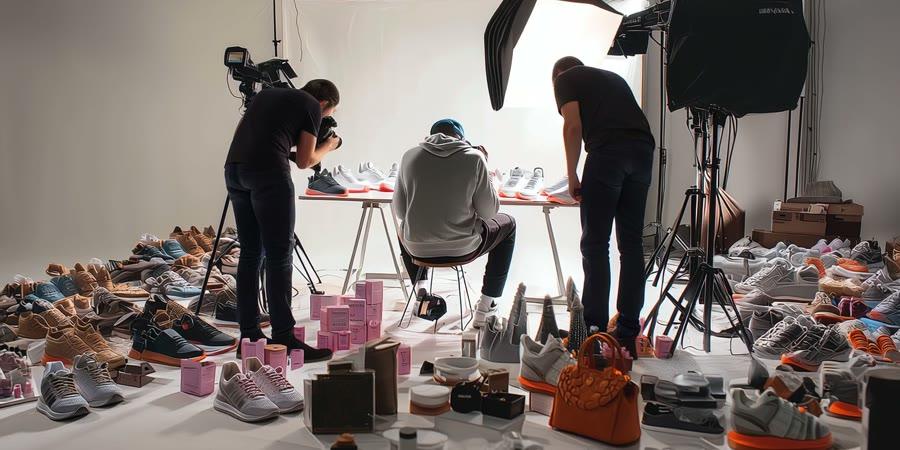
Every catalog has two kinds of product. The ones that get photographed, and the ones that get whatever the supplier sent. Nobody decided this. It fell out of arithmetic.
Run the numbers on a shoot
A product shoot has a fixed shape: a studio, a photographer, a stylist, a day. Whatever that day costs you, it covers somewhere between a dozen and a few dozen products, done properly. Call it thirty.
A thousand-product catalog is therefore thirty-odd shoot days. Six thousand products is two hundred. At that point the honest planning conversation stops being when do we shoot and becomes which products are worth shooting — and the answer is the same everywhere: the new arrivals, the bestsellers, the things going in the campaign. The hero SKUs.
Everything else runs on supplier images. Different lighting, different backgrounds, different crops, different quality — sitting side by side in the same grid, on the same product pages, in the same retargeting feed.
What the long tail actually costs
The cost of not covering the long tail is invisible, which is why it survives. It shows up as a slightly worse conversion rate on eighty percent of the catalog, a product page that looks unfinished next to the hero page, and a retargeting set that can only feature the products you happen to have assets for.
It also constrains the campaign before anyone opens a briefing document. You cannot run a seasonal push across a range you have no imagery for. The creative budget silently becomes a merchandising decision.
Change the unit of work
What breaks the arithmetic is not working faster. It is changing what one unit of effort covers. When setup is spent on a recipe — a look, a brand tone, a set of framings — rather than on a product, the run covers the range instead of the item.
That is a real shape, not a thought experiment. A studio operator refreshed a 6,000-product catalog for United Seats that way: build the recipe once, run it across the catalog as a campaign, then keep making individual fixes directly rather than routing them back through a designer. The whole range shipped, not a hero subset.
And when the format is worth pushing further, the ceiling is higher than static: in Taboola-partnered testing, interactive and motion creatives lifted click-through rate by roughly 40% against a static control, now running in live production at 100M+ impressions.
"Coverage is not a creative problem. It is an operations problem wearing a creative problem's clothes."